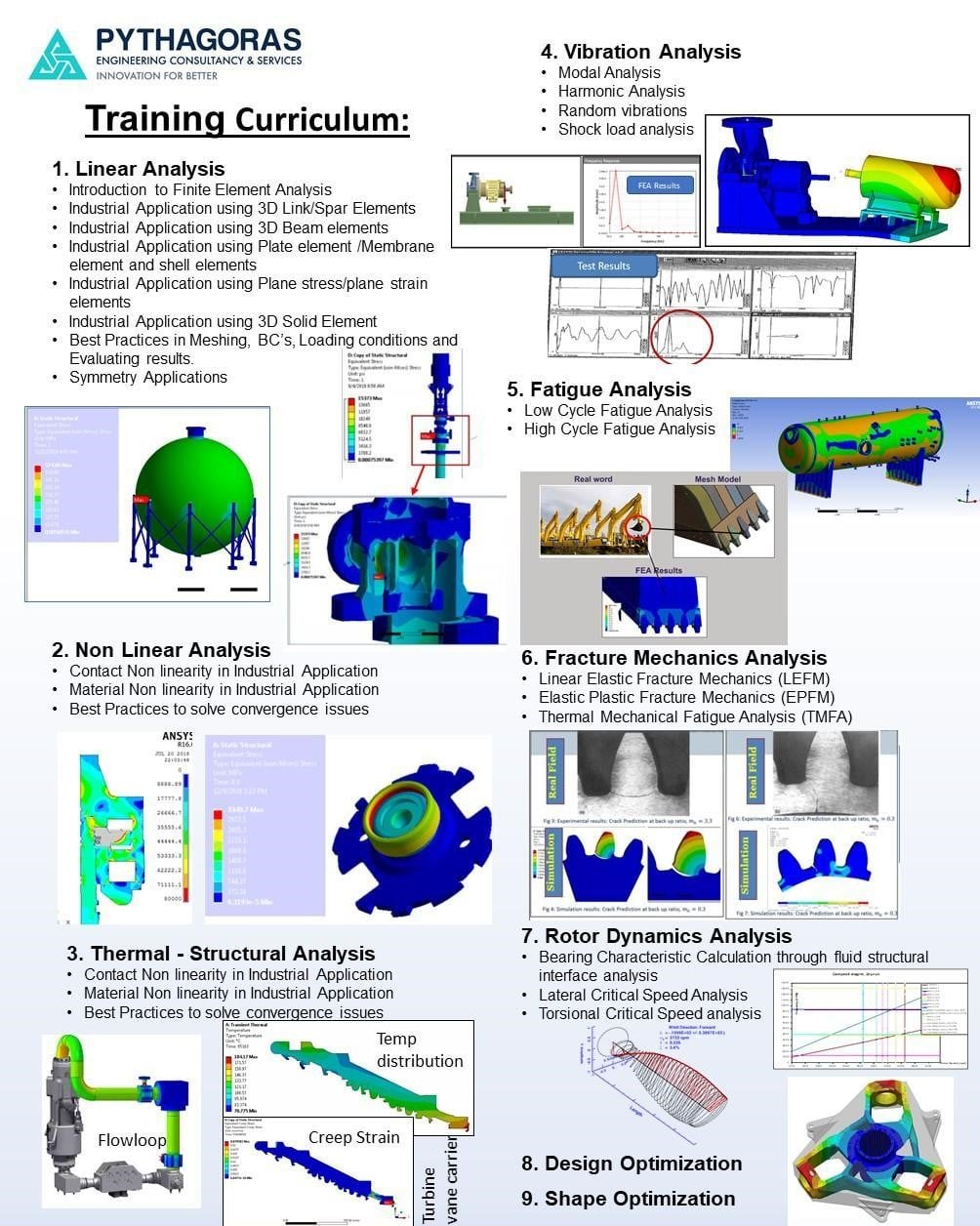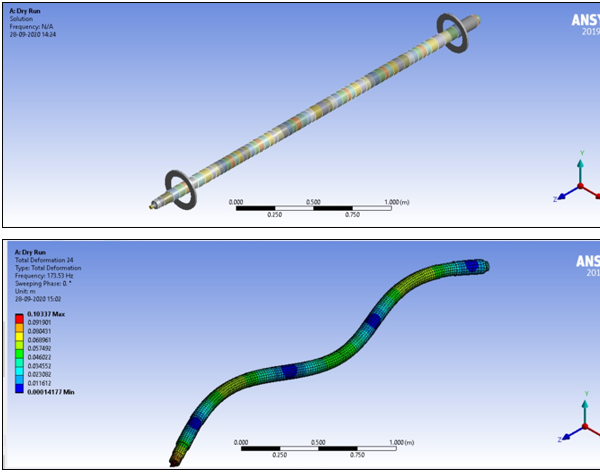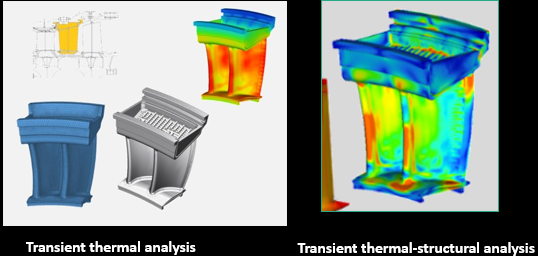
• Engineering design and finite element analysis training

    Based on industrial best practices

  • Engineering design and finite element analysis training

    Based on industrial best practices

  • Engineering design and finite element analysis training

    Based on industrial best practices

  • Engineering design and finite element analysis training

    Based on industrial best practices

14 Online courses

Explore a variety of fresh topics

Expert instruction

Find the right course for you

Lifetime access

Learn on your schedule

ASME Fatigue Analysis for Pressure Vessels & Welded Structures

Dr. Joel Daniel

0

Compare

₹10000

Last updated Tue, 27-Jan-2026
0 Lessons 00:00:00 Hours English
Practical Engineering with ASME Codes & FEA
  • ✅ Understand fatigue failure mechanisms in welded joints
  • ✅ Extract and interpret stresses from FEA for fatigue checks
  • ✅ Apply Stress-Life (S-N) based fatigue methods correctly
  • ✅ Perform ASME BPVC Section VIII Division 2 fatigue screening
  • ✅ Account for mean stress effects using Goodman relationships
  • ✅ Use Rainflow counting and Miner’s rule for real load histories
  • ✅ Evaluate constant and variable amplitude loading
Webinar Session

Dr. Joel Daniel

0

Compare

Free

Last updated Mon, 19-Jan-2026
2 Lessons 01:26:51 Hours English
The design and verification of pressure vessels are regulated by the design requirements outlined in the ASME Boiler and Pressure Vessel Code (BPVC). Designing a convention that meets the standards of the ASME BPVC code would result in a design that is characterized by a cautious approach. The present scenario may be effectively addressed via the use of contemporary finite element analysis (FEA) commercial software packages such as ANSYS. This training session will focus on the discussion of size optimization for pressure vessels that adhere to the design-by-analysis standards outlined in the ASME Sec. VIII Division 2 specification. The integration of ANSYS is used to do stress analysis, hence achieving the desired outcome.
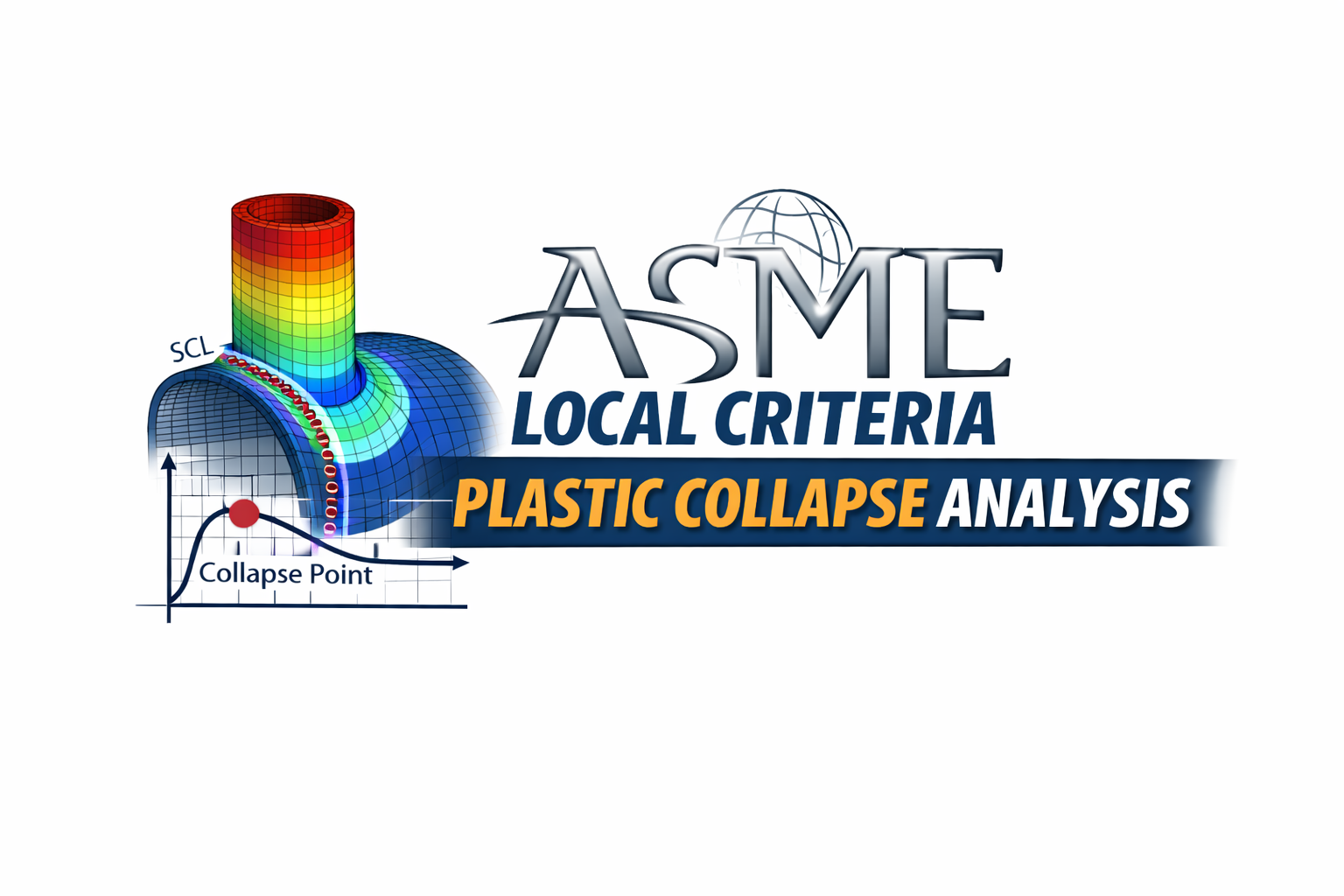
ASME Local Criteria Plastic Collapse Analysis

Dr. Joel Daniel

0

Compare

₹5000

Last updated Thu, 15-Jan-2026
14 Lessons 13:30:00 Hours English
This 9-session layout is suitable for training, interview prep, or a short course module focused specifically on local criteria as per ASME Section VIII Div. 2.
  • What You Will Learn from This Course By the end of this program, you will be able to: Understand ASME plastic collapse philosophy with clear distinction between local and global criteria Perform ASME-compliant local plastic collapse checks using ANSYS Simulate Apply stress categorization and stress linearization correctly for code assessment Interpret and justify local yielding using elastic–plastic analysis Confidently defend simulation results in design reviews, audits, and interviews
ASME Global criteria Plastic Collapse Analysis

Dr. Joel Daniel

0

Compare

₹5000

Last updated Thu, 15-Jan-2026
27 Lessons 13:45:47 Hours English
This session introduces the ASME global plastic collapse criteria used in Design-by-Analysis to prevent gross structural failure under primary loads. It explains the concept of plastic collapse, the difference between global and local collapse, and the role of limit load and elastic–plastic analysis. Participants will gain practical insight into collapse load identification, including the Limit Load and Twice Elastic Slope methods, with relevance to real-world FEA and code-compliant design.
  • Understand the concept and importance of global plastic collapse Differentiate global vs local collapse as per ASME philosophy Interpret ASME criteria and acceptance checks for plastic collapse Identify collapse load using limit load and TES methods Apply elastic–plastic FEA concepts for code-compliant design
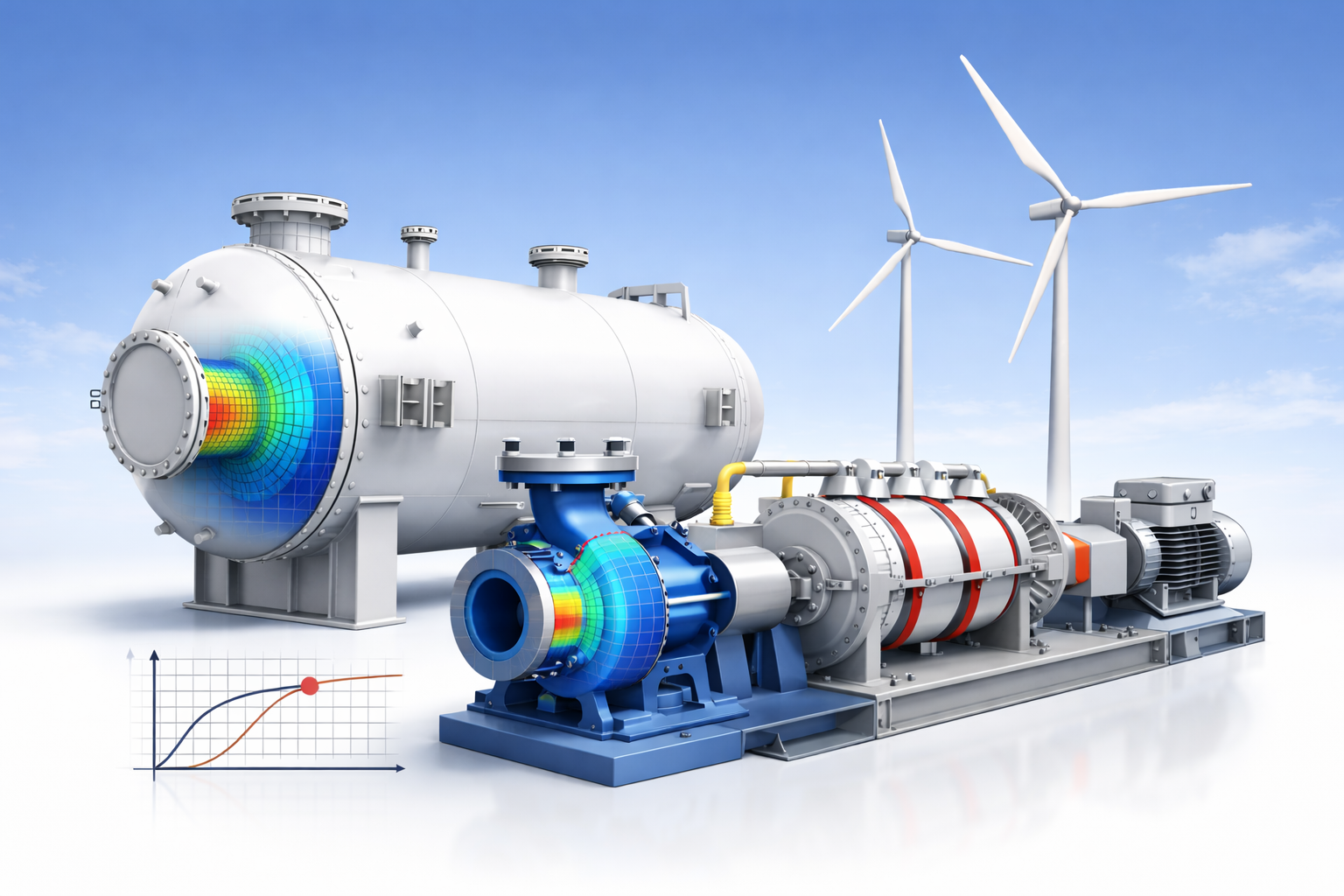
Basic FEA ahead of Pressure vessel, Centrifugal pumps and compressors, wind structures

Dr. Joel Daniel

0

Compare

₹25000

Last updated Thu, 15-Jan-2026
109 Lessons 23:47:07 Hours English
This course is essential to start any further FEA course including pressure vessel design, pumps, compressors, wind structures, gas turbines, and aerostructures. This is a free course for the people who are going to take any advanced course.
  • Fundamentals of FEA
  • Meshing Techniques: Hexa and Tet
  • Link Elements applications
  • Beam Elements applications.
  • Shell element applications
  • Solid Element applications
  • Best Practices of applying boundary conditions
  • Best Practices of applying loading conditions
  • Results Interpretation
  • Symmetry applications: Cyclic, axisymmetric
  • Examples: Centrifugal Pump Casings
  • Examples: Propeller shaft
  • Examples: Test Rig
  • Examples: multistage centrifugal pumps
  • Examples: Gear box
  • Examples: Spur gears
ANSYS Training: Mechanical Vibrations

Dr. Joel Daniel

0

Compare

₹30000

Last updated Sat, 27-Jan-2024
42 Lessons 00:00:00 Hours English
FEA is a valuable tool in the analysis and design of mechanical systems to ensure that vibrations are well-understood and controlled, leading to the development of reliable and efficient structures and machinery. It allows engineers to assess the dynamic behavior of structures under various conditions and make informed design decisions to prevent potential issues related to mechanical vibrations.
  • Understanding of FEA Basics: ANSYS training in mechanical vibrations typically covers fundamental concepts of FEA, ensuring participants have a solid understanding of how the software works, including meshing, material properties, boundary conditions, and solving techniques
  • Modelling Complex Structures: Participants learn how to create accurate 3D models of complex structures and mechanical components relevant to mechanical vibrations analysis using ANSYS
  • Meshing Techniques: The training includes meshing strategies and techniques for generating high-quality meshes that capture the geometry and structural features effectively, especially in areas prone to stress concentrations
  • Material Modeling: Engineers gain expertise in assigning appropriate material properties and models within ANSYS, considering isotropic or anisotropic behavior, and accounting for damping characteristics relevant to mechanical vibrations
  • Boundary Conditions and Loading: Training covers the proper application of boundary conditions and loading scenarios to simulate real-world conditions, ensuring the accuracy of the simulation results
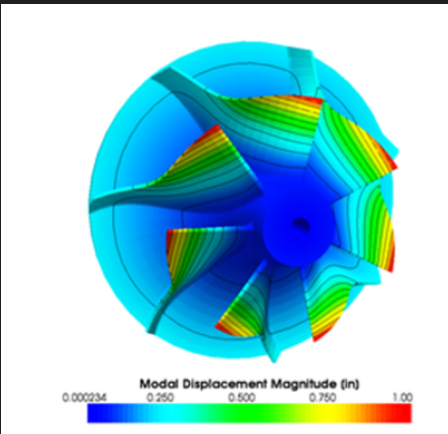
  • Modal Analysis: Participants learn how to perform modal analysis using ANSYS, allowing them to extract natural frequencies, mode shapes, and participation factors critical for understanding the vibrational behaviour of structures.
  • Harmonic Analysis: Training includes techniques for performing harmonic analysis in ANSYS, enabling engineers to study the response of structures to periodic excitations and identify potential resonance issues
  • Transient Analysis: Engineers gain the ability to simulate transient dynamic events, such as start-up, shutdown, or impact loading, to understand the time-dependent response of structures to dynamic forces
  • Post-Processing and Result Interpretation: Training covers post-processing tools in ANSYS for interpreting results, visualizing mode shapes, stress distributions, and displacement patterns critical for assessing the vibrational characteristics of structures
  • Fatigue Analysis: Participants learn how to perform fatigue analysis within ANSYS, helping them assess the durability and fatigue life of components subjected to cyclic loading
  • Optimization Strategies: Training may cover optimization techniques within ANSYS, allowing engineers to iteratively optimize designs to reduce vibrations, improve performance, and meet design criteria
Basic FEA Training for Beginners

Dr. Joel Daniel

0

Compare

₹20000

Last updated Thu, 15-Jan-2026
22 Lessons 08:19:27 Hours English
Online Training/Classroom For Basic FEA Course using ANSYS By Dr. Joel Daniel M.Tech., Ph.D., MISTE, MIE, MIPE
  • Step 1: Theoretical approach: Students will use theoretical concepts to solve problems. Every one of these classes aids pupils in reviewing the fundamentals and comprehending the issue in depth.
  • Step 2:FEA Approach: Students will use FEA to solve the same issue. This part assists students in validating FEA results using manual calculations.
  • Step 3: Industrial applications: Industrial applications on similar concepts will be explained in detail. In the third step,
  • In the third step, students will be familiar with FEA and the theoretical approach. He will be in a position of handling practical engineering problems
ANSYS Training: Centrifugal pump and Compressor Design and Analysis as per API, Non-API, Euro Code, ASME codes.

Dr. Joel Daniel

0

Compare

₹20000

Last updated Sun, 14-Apr-2024
18 Lessons 00:00:00 Hours English
  • Torsional stiffness for base skid as per HIS standards
  • Stress calculations for the base plate under lifting conditions, transportation conditions, wind and seismic load conditions
  • Modal analysis assessment of base skid
  • Harmonic analysis of the base skid
  • Random analysis of the base skid
  • Stiffness test acceptance criteria for base skid as per API 610, clause 6.3.7
  • Structural assessment of centrifugal pump casing under MAWP and nozzle loads as per API 610 clause 5.3.4
  • Leakage assessment of the casings as per API 610 clause 5.3.3
  • Calculations of stiffness and damping values for short and long bearings (wear rings, sleeves, and hydraulic bearings)
  • Rotor dynamics: Lateral critical speed analysis as per API 610, Annex I.
  • Torsional critical speed analysis as per API 610 clause 5.9.2
  • Bolt assessment
  • Weld assessment as per DNV codes
  • Stress analysis for casings and impellers under variable pressure load conditions
  • Ultimate Limit State (ULS) for the compressor skid
  • Serviceability Limit States (SLS) for the compressor skid
  • Accidental Limit States (ALS) for the compressor skid
  • Blast Load analysis for the compressor skid.
Offshore wind turbine structures

Dr. Joel Daniel

0

Compare

₹20000

Last updated Sat, 28-Oct-2023
32 Lessons 00:00:00 Hours English
This training includes FEA modelling of the weld structures of the wind structures as per DNV guidelines, SCF, Ultimate Limit States (ULS) and Serviceability Limit States (SLS), Accidental limit states, fatigue damage calculations of the K-joint, X-joint, J-joint of the wind foundation structures.
  • Participants will have developed a thorough grasp of structural design using FEA, including the use of advanced nonlinear simulations, by the conclusion of this course. They will be prepared to confidently design and assess wind structures, guaranteeing their safety and optimum performance.
  • Introduction to Wind Turbine Foundation Structures and DNV Codes
  • Introduction to Finite Element Analysis
  • Modeling Wind Turbine Foundations for FEA
  • Load and Boundary Conditions
  • Ultimate Limit State (ULS) Analysis
  • Fatigue Limit State (FLS) Analysis
  • Serviceability Limit State (SLS) Analysis
  • Weld strength Calculations as per DNV codes
  • Optimization and Design Review
  • Case Studies and Practical Applications
  • Real-world case studies of wind turbine foundation projects
  • Hands-on exercises in FEA software for ULS, FLS, and SLS analysis
  • Practical examples of weld calculations and hotspot analysis
Pressure vessel design using ANSYS software as per ASME

Dr. Joel Daniel

0

Compare

₹50000

Last updated Mon, 19-Jan-2026
178 Lessons 02:06:35 Hours English
The design and verification of pressure vessels are regulated by the design requirements outlined in the ASME Boiler and Pressure Vessel Code (BPVC). Designing a convention that meets the standards of the ASME BPVC code would result in a design that is characterized by a cautious approach. The present scenario may be effectively addressed via the use of contemporary finite element analysis (FEA) commercial software packages such as ANSYS. This training session will focus on the discussion of size optimization for pressure vessels that adhere to the design-by-analysis standards outlined in the ASME Sec. VIII Division 2 specification. The integration of ANSYS is used to do stress analysis, hence achieving the desired outcome.
  • 1. This course aims to provide a comprehensive understanding of the fundamental concepts and advanced methods involved in the design of pressure vessel structures using Finite Element Analysis (FEA).
  • 2. Acquire a comprehensive understanding of solid-shell components in order to effectively develop a finite element analysis (FEA) model for the pressure vessel.
  • 3. Acquire the necessary skills to effectively implement the American Society of Mechanical Engineers (ASME) norms and standards in the realm of pressure vessel design.
  • 4. To enhance proficiency in doing experiments involving nonlinear materials, contact mechanics, and large deformations, as well as to improve the ability to analyze and comprehend stress-strain relationships.
  • 5. This program aims to cultivate and strengthen individuals' critical thinking and problem-solving skills specifically in the context of difficult design issues pertaining to pressure vessel constructions.
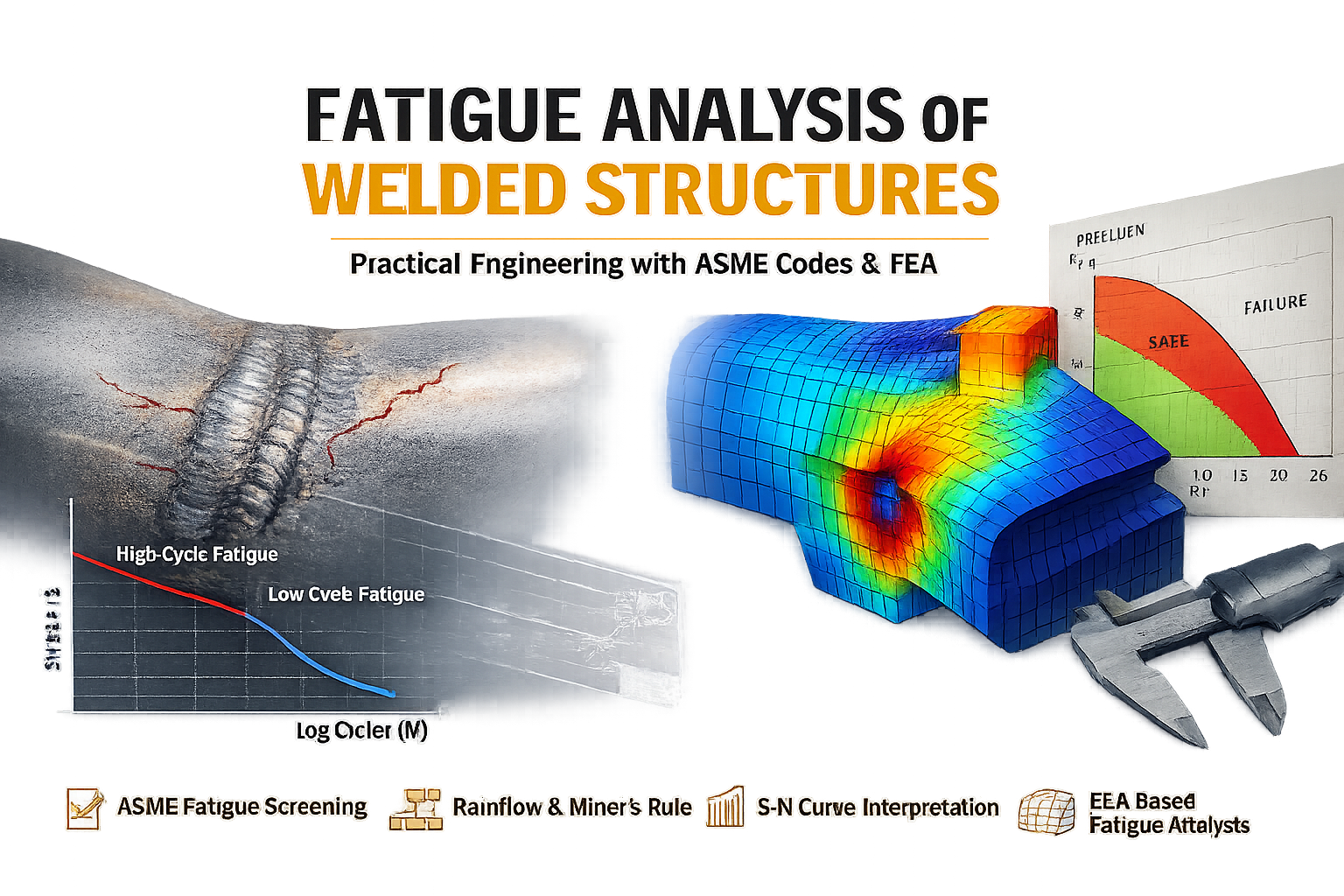
Course Image

Fatigue Analysis for Pressure Vessels

ASME Section VIII Division 2 – Part 5

This specialized training program provides a complete, code-compliant methodology for fatigue assessment of pressure vessels based on ASME Section VIII Division 2, Part 5. The course integrates theory, ASME code interpretation, and finite element analysis (FEA) to enable engineers to confidently perform fatigue screening, stress-life, strain-life, ratcheting, and weld fatigue evaluations for real-world pressure equipment.

Course Objectives

  • By the end of this course, participants will be able to:
  • Understand fatigue damage mechanisms in pressure vessels
  • Apply ASME Div 2 Part 5 fatigue rules correctly
  • Perform fatigue screening as per ASME 5.5.3
  • Extract and process FEA stresses for fatigue assessment
  • Conduct stress-life and strain-life fatigue evaluations
  • Assess ratcheting, shakedown, and weld fatigue
  • Execute an end-to-end fatigue assessment workflow

Detailed Course Modules


MODULE 1 – Fatigue & Failure Fundamentals

  • Overview of pressure vessel failure modes

  • Fatigue cracking vs plastic collapse vs buckling

  • Cyclic loading sources in pressure vessels

  • Fatigue damage accumulation concepts

  • Difference between strength-based design (Part 4) and fatigue-based design (Part 5)


MODULE 2 – Stress Generation & FEA Foundations

  • Types of stresses relevant to fatigue (primary, secondary, peak)

  • Stress categorization for fatigue assessment

  • Linear elastic FEA assumptions and limitations

  • Mesh requirements and convergence for fatigue analysis

  • Stress linearization through thickness

  • Identification of fatigue hot spots


MODULE 3 – Fatigue Screening (ASME Part 5.5.3)

  • Purpose and philosophy of fatigue screening

  • Applicability limits and conservative assumptions

  • Screening Method A – Material and load-cycle based screening

  • Screening Method B – Elastic stress range screening

  • Screening Method C – Welded joint screening

  • Decision flow for detailed fatigue analysis


MODULE 4 – Stress–Life (S–N) Fatigue Analysis

  • Stress-life fatigue theory fundamentals

  • High-cycle vs low-cycle fatigue behavior

  • ASME fatigue design curves

  • Mean stress effects and correction models

    • Goodman method

    • Gerber method

  • Rainflow cycle counting technique

  • Constant amplitude fatigue damage calculation

  • Variable amplitude fatigue damage using Miner’s Rule


MODULE 5 – Strain-Based & Elastic–Plastic Fatigue

  • Onset of plasticity and local strain concentration

  • Limitations of purely elastic fatigue analysis

  • Strain-life (ε–N) approach fundamentals

  • Coffin–Manson and Basquin relationships

  • Mean stress effects in strain-life fatigue

    • Morrow model

    • Smith–Watson–Topper (SWT) parameter

  • Local strain estimation using Neuber’s Rule


MODULE 6 – Ratcheting and Shakedown

  • Ratcheting behavior under cyclic pressure and thermal loads

  • ASME ratcheting acceptance criteria

  • Elastic and elastic-plastic ratcheting assessments

  • Shakedown concepts and cyclic stabilization

  • Relationship between ratcheting, shakedown, and fatigue life

MODULE 7 – Weld Fatigue and Structural Stress

  • Fatigue behavior of welded joints

  • Stress concentration and crack initiation at weld toes

  • ASME weld fatigue evaluation approaches

  • Equivalent Structural Stress Method (ASME Method C)

  • Fatigue acceptance criteria for welded joints

  • Role of inspection, pressure testing, and life management


MODULE 8 – Integration, Workflow & Case Studies

  • End-to-end fatigue assessment workflow

  • Load definition → FEA → stress extraction → fatigue evaluation

  • Typical mistakes and best practices

  • Case studies on pressure vessels and nozzles

  • Documentation and reporting as per ASME requirements

Announcements

Fatigue Analysis for Pressure Vessels ASME Section VIII Division 2 – Part 5 24 Sessions | 45 Minutes Each | Practical + Code-Oriented

Testimonials

  • I have taken Pythagoras Engineering online FEA classes on Static linear/ non-linear and dynamic analysis. I was a complete beginner in ANSYS and FEA domain before taking this class. After my course completion, I became quite strong in my FEA basics and well versed in ANSYS package. I would strongly recommend engineering students, or working professionals to take his course because he offers an exposure and knowledge of:
    1) Best industrial practices used in FEA model pre-processing in ANSYS,
    2) Real time industrial projects for practice,
    3) Strong theoretical basics along with ANSYS.
    4) Analytical and hand calculation basis to validate ANSYS results.
    All of this comes from his rich teaching, research and industrial experience. And his personal commitment to give his best to his students is also commendable. Therefore his lectures have a big advantage over typical CAD/FEA institute where only the software knowledge is predominantly imparted.


    Rohith Pradeep Kongot
    Senior Engineer (NPD) at Alpha Design Technologies

  • I have attended worth sessions on FEA along with industrial examples conducted by trusted trainer Dr. Joel Daniel. His teaching methodology helped me in learning from scratch to complex industrial problems. He has sound knowledge on FEA theory, ansys workbench, apdl. Apart from training, his qualities like, helping & down to earth nature, mentoring to boost the career are really appreciable. He assisted me in learning structural design which includes linear and nonlinear, structural vibrations and rotor dynamics etc. I strongly recommend his training for fresher as well as experienced one who really wants to rule the FEA world.


    Prasanna Tale
    Design & Analyst Engineer

  • I have taken training from Dr. Joel Daniel, after my graduation for 8 weeks. He explained me each and every topic using practical examples.
    He is very patient in explaining the concepts in different ways till student have better understanding. His training helped me to focus more on concepts in a clear way that helped me to choose right career path.


    Aravind kumar Gottimukkhala
    Engineer 1 at Safran Engineering Services

  • I have undergone FEA training course formulated by Dr. Joel daniel. He has in depth knowledge in FEA and have drafted an easy to understand syllabus on FEA. The use of real time industrial problems, makes the course engaging and interesting. Even after completion of the course, he made himself available for clarifying my queries. I personally recommend this training course for engineering graduates aspiring to get in to the mechanical industry


    KP Harishankar
    CAE Engineer at DSI Technologies

  • Training is worth and bridges gap between industry needs and theoretical knowledge


    Deepak Verma
    R&D Engineer at ABB

  • Dr,Joel Daniel is one of the best faculty for learning FEA.His way of teaching and involving student into a live projects is excellent. The course structured is well described and very much useful for the R&D industry. His approach to teaching is totally different than other trainers.After training, his support towards students is very excellent which I never found at other FEA faculty. I highly recommended Dr. Joel for FEA training. Moreover, his expertise in APDL is excellent.


    Shaheed Hossain
    FEA Engineer

  • I got an opportunity for a valuable session of ANSYS learning and training with industrial examples by Dr. Joel Daniel. His methods and technical competency were significant for me in learning/completing the concepts on schedule. Apart from his way of mentoring, he took initiative in documenting my work enabling a smooth learning process. He assisted me in learning structural design which includes linear and nonlinear, structural vibrations and rotor dynamics etc.


    Vishal Sinha
    CAE Engineer - Renault Nissan (Visvesvaraya Technological University)

  • Class are well structured and the explanation was more towards practical approach, which makes easy to understand. different kinds of problem solving approaches wr explained using WB & APDL


    Harish Kolla
    Simulation Engineer (Hiwi) at Fraunhofer IPA (SRM University)

  • Dr.Joel's training is good and will be clean and crystal clear,both in concepts and application a good place to learn and can get the projects done. If you want to learn basics and to get a reliable results for FEA results I recommend Dr.Joel Daniel.


    Satish Kumar A
    R&D - FEA - ANSYS

  • Dr.Joel is a highly experienced FEA Consultant and his training classes involve a practical approach towards strength analysis. The most interesting part is that he covers a variety of industry case studies giving exposure to non-linearities, linear dynamics, and fracture mechanics, encompassing analytical and FEA predictions supported by testing data.


    ABHILASH GULHANE
    MAPDL Software Testing at ANSYS (Purdue University Indianapolis)

  • Pythagoras Engineering offers the best possible course coordinator on the ANSYS / FEA with very good course content important for understanding of ANSYS Tool along with knowledge of Finite Element Analysis. They not only provide training for ANSYS but also inform about tricks of Trade i.e. how to use this tool efficiently and accurately.


    Baljeet Singh
    Civil & Structural Engineering Professional at McDermott International Inc. (IIT-Delhi)

  • Dr. Joel Daniel conducted One-week workshop on Advanced Finite Element Analysis simulation in Engineering applications for NAVAJO TECHNICAL UNIVERSITY, USA,during May 24 to May 28-2021. From the start of the day, right until the end, Dr. Joel Daniel created an interactive learning environment that kept the students enthusiastic about the FEA. He covered topics on Linear stress analysis, thermal analysis, vibration analysis, and fracture mechanics. He has also shared case studies that helped our students to have an idea on how to use FEA concepts in real time applications. Feedback from the students has been great. I would highly recommend Dr. Joel Daniel both for his real-world practical knowledge and insights and his overall theoretical knowledge in Finite Element Analysis.


    Navajo Technical University,USA

  • Sir, The success I've had in my career is due to your support and encouragement. I appreciate you so much and value everything that I have learned from you.I truly appreciate your sound technical knowledge on subjects as well as tools like Ansys classic and workbench.


    YOGESHWARARAO J
    CAE analystCAE analyst webasto/satyam ventures,Hyderabad

  • I had undergone a training under Dr. Joel for FEA in Ansys for around 60 hours. He taught Linear and nonlinear static structural analysis, vibration analysis, rotor dynamics, contacts, submodelling techniques, fracture mechanics brilliantly. After this training I am confident that I can do the real time projects. I will definitely recommend this training to my friends and colleagues."


    Roopesh Kumar
    Simulation Engineer PDE PDS,Micron Technology,Hyderabad

  • I had undergone Ansys training from Dr Joel during my engineering. The training was wonderfully engaging with pure industry-oriented problems. The course content was so good, and the content was presented in an enthusiastic way. I love Dr Joel's way of teaching and the approach he used to explain each and every content. I strongly recommend Ansys training from Dr Joel to every CAE job aspirants.


    SANJU A KSANJU A K
    CAE Engineer,Valeo,Chennai

Clients We Worked With

  • Logo 1
  • Logo 2
  • Logo 3
  • Logo 4
  • Logo 5
  • Logo 6
  • Logo 7
  • Logo 8
  • Logo 9
  • Logo 10
  • Logo 11
  • Logo 12